






 |
 |
 |
 |
 |
 |
Join Peter Lebeck for Our 4-day Spring '26
Clampout In Johannesburg, California


Johannesburg, California came to be because of one of the greatest gold strikes ever. It happened in 1895, in the Mojave Desert in the foothills of the El Paso Mountains. Charlie Burcham and his partners, John Singleton and F. M. Mooers, struck gold on the slopes of what they called "Rand Mountain," and they established what came to be called the "Yellow Aster Mine." Over the 38 years that the Rand Mining District was most active, the Yellow Aster, along with other mines, produced over 250,000 pounds of gold. The area also produced significant amounts of tungsten and silver. All of it together was worth billions in today's dollars.
The three named their mining camp "Randsburg," and thousands of miners and their families came rushing into the area to ply their fortunes. But Randsburg quickly became too small for its population, and it lacked what was necessary for a sustainable town, including sanitation and water. Moreover without adequate water it was impossible to support hard rock milling in Randsburg instead of having to cart ore all the way to Garlock for processing.

The solution to the town's problems turned out to be Charlie Burcham's wife.
Rose Lamont Burcham had staked Charlie's adventure into the El Pasos for a share of whatever they might find, and that made her a partner. But she also happened to be a physician at a time when female medical doctors were rare. Rose moved to Randsburg and began to sort the place out. She established medical services, sanitation and a school.
Rose also solved the problem of overcrowding by taking advantage of the flat area just south of town she called "Johannesburg." That's where the district's cemetery is located, and that's what we'll be plaquing on this trip.

Johannesburg, which today abuts U.S. 395, (or more properly said, U.S. 395 abuts Johannesburg, because there was no U.S. 395, back in the day) was laid out in a grid, and it is said that Rose Burcham was not only responsible for planning Johannesburg but also for building the aqueduct that brought the water needed to support both the people and the 100 stamp mill built to process ore locally.
The last time we Clamped in Johannesburg we had great weather and great camaraderie, so do expect a good time, but pack accordingly. Typical daytime temperatures in mid-April are in the upper 60's to low 70's, with nighttime temperatures in the mid-40's. Rain is infrequent (on average once a month) but desert roads are subject to flash flooding so keep that in mind.
If you are taking CA-14 into Mojave to get to the Clampsite, leave CA-14 and instead use U.S. 395 to get to Johannesburg. As of this writing, the Redrock/Randsburg Road remains closed due to flood damage from last September's rains, so Johannesburg is not accessible from CA-14. If you take advantage of our posted directions, you should have no trouble getting even a large rig to the Clampsite.

Thanks to the generosity of Brother Neil Shotwell and his Widder, Holly, we'll be Clamping at the site of what had been "The Rand School," which has a very comfortable and well-lit multipurpose room that easily accommodates 100 men.
Our outside Clamping space is adjacent to the schoolhouse. It's on natural ground without any pesky trees to spoil your view. Make sure to bring plenty of shade and water and expect no hook-ups. Burn barrels are OK so long as you keep them off of the ground. While we expect to be able to accommodate everyone, this is not a place for manspreading. Please obey directions from our Clamps Hostrix and move your rig if you are asked to adjust. We won't have space for circling the wagons, but we firmly believe that getting to know your neighbor at a Clampout is a very good thing, but please keep the noise down to avoid waking the neighborhood.

The Clampsite is seven blocks west of U.S. 395, where you can find a Texaco station open 24 hours with an adjacent minimart, but if you need something, it's best to bring it with you. Hamburgers, sandwiches and beer are available in Randsburg, including at the Joint, which has a full bar.
Gates open at noon on Thursday, but you are on your own foodwise until Friday afternoon, starting with the Humbug's Meet 'n' Greet. If you'd like to bring some pre-dinner snacks to share, or to share anytime, it's always appreciated by the Brethren. The chapter will provide brunch on Saturday, so please do not bring meat for Saturday's potluck breakfast because there will be no potluck breakfast. WE WILL FEED YOU.
Lastly, please attend our monument dedication on Saturday at 10:42 am, at the Rand District Cemetery. It's only five blocks from the Clampsite. It will show your support for our chapter and help build the reputation of our order. We are not merely about celebrating and commemorating history but also showing the public that local history matters.
To read about Clamping with Peter Lebeck in Kern County, just read on.

ABOUT CLAMPING WITH PETER LEBECK
Kern County is a big place and it covers all kinds of terrain: from the driest portions of the Mojave Desert, to the snowiest pine forests of the Sierra Nevada; from the oak woodlands of Walker Basin to the still wild grasslands of the San Joaquin Valley. Then of course there is Fort Tejon, Pine Mountain, the Kern River Valley, the Tehachapis, and…you get the drift. Kern County IS a BIG and interesting place.
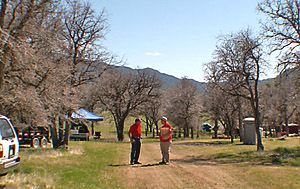
And needless to say, we do try to get around. So if you are looking for something different, always make sure to look us up when you are planning your Clamping Calendar. If you've Clamped the desert, try the mountains. If you've Clamped the mountains, try the desert. But always make an effort check with us because we may be going someplace you'd really, really enjoy, and we do get around.
PXL Clampouts are not so large that you'll ever feel lost, and not so small that you'll ever feel like you're crashing someone's private party. Brothers visiting from other chapters are always made to feel welcome, and we especially encourage you to drop by if you live in Kern County or the adjoining areas of southern and central California.
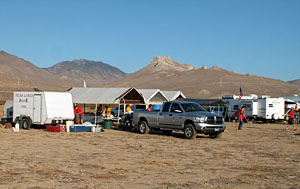
At Peter Lebeck we plan two, full-weekend Clampouts every year, one in the spring and the other in the fall, and we favor overnight outings because we believe it is the surest way to make sure that each of our Brothers makes it home safely. At Peter Lebeck we also believe that Clamping is as much about plaquing as it is about camping and camaraderie, so we try to mount at least one erection every year and we try to Clamp near by. So won't you join us for the adventure? We'll make sure you get an extra helping of Timbo's beans.